FROM THE WATER’S EDGE · DOCK PLANNING

Ice. Movement.
The details matter.

A dock is a system: its surface, structure, connections and anchoring all work together. Material alone doesn’t tell the whole story.

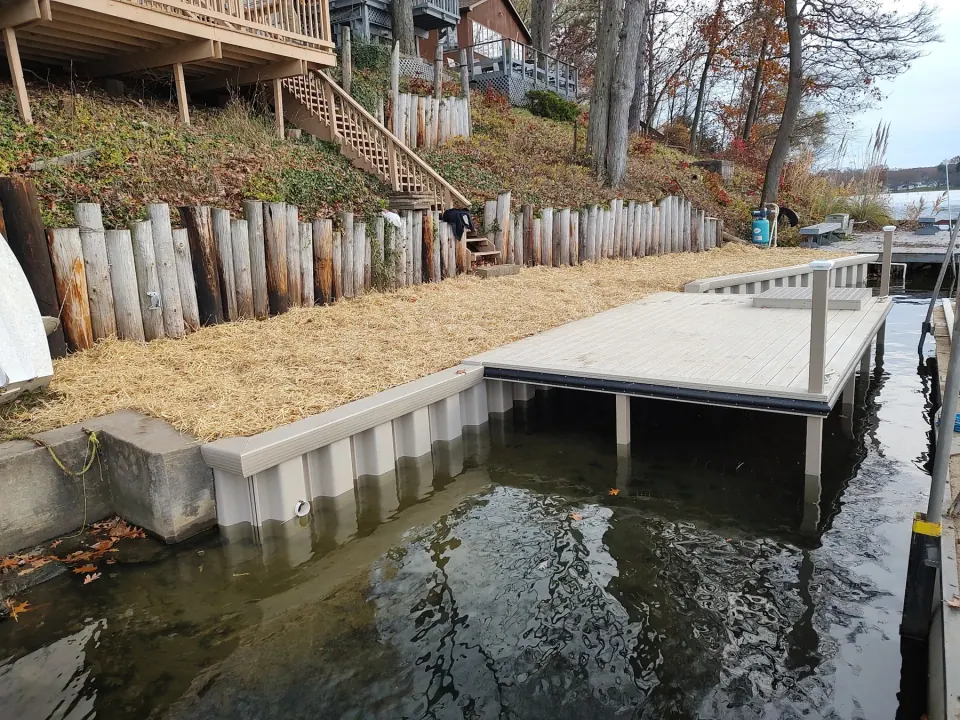
Dock and shoreline construction beside an Ohio lake

WHAT BREAKS DOCKS?

Think beyond
the decking.

01 / ICE & SEASONAL CHANGE

Plan for winter.

Ice movement and changes in water level can put loads on a dock, its connections and its anchoring. Winter procedures depend on the system, manufacturer guidance and local conditions; no dock should be treated as ice-proof.

02 / WIND, WAVES & BOATS

Movement adds up.

Repeated motion, wake exposure and watercraft contact can loosen or damage components. The layout and anchoring need to suit both the site and the way the dock is used.

03 / CONNECTIONS & SUPPORT

Look underneath.

The visible surface is only part of the structure. Connections, supports and attachment points deserve attention when evaluating an existing dock or comparing a replacement.

04 / AGE & MAINTENANCE

Watch for changes.

Loose boards, movement that feels new, damaged connections, corrosion or a shifting shoreline are reasons to arrange an inspection. A clean surface does not establish structural condition.

05 / DAILY USE

Design around people.

Boat access, swimming, storage and gathering space affect the layout. Surface condition, clear walking routes and practical access deserve as much thought as the overall footprint.

06 / THE WHOLE SHORELINE

Consider the approach.

A dock needs a useful connection to land. Steps, gangways and shoreline conditions can affect how comfortably the whole waterfront works.

CHOOSING A SYSTEM

Match the dock
to the conditions.

Floating and fixed docks each have a place. The right approach depends on water depth, water-level variation, exposure, bottom conditions and your intended use—not a blanket claim that one material is best everywhere.

If a dock feels unstable or has visible damage, keep people off the affected area and arrange an assessment. Photos can start the conversation, but they don’t replace an on-site evaluation of structural condition.

LET’S TALK ABOUT YOUR WATERFRONT

Bring your ideas.
We’ll bring the experience.

A few photos, your location, and what you want to change are a good place to start.

Plan your project ↗

A QUICK QUESTION? START HERE.

Not sure where to start?
Text us a photo.

Tell us where your waterfront is and what you’re considering. A photo of your current setup is a helpful first step.

Text 330-775-7386

We generally reply during business hours, 10 a.m.–5 p.m. Eastern. Text anytime; after-hours messages will be answered during business hours.

On a computer? Use this number in your phone’s messaging app.
Text the AquaLife team

LET’S TALK ABOUT YOUR WATERFRONT

A quick question.
A helpful next step.

Questions about a dock, boat port, or shoreline project? Tell us what you have in mind—or text us a photo of your waterfront.

Text 330-775-7386

We generally reply during business hours, 10 a.m.–5 p.m. Eastern. Text anytime; after-hours messages will be answered during business hours.

On a computer? Open your phone’s messaging app and text the number above.
Prefer to call? 330-622-1429 ↗Send a project inquiry ↗