
Dock planning · 3 MIN READ
Choosing Materials for a Custom Dock
By AquaLife Construction · Updated
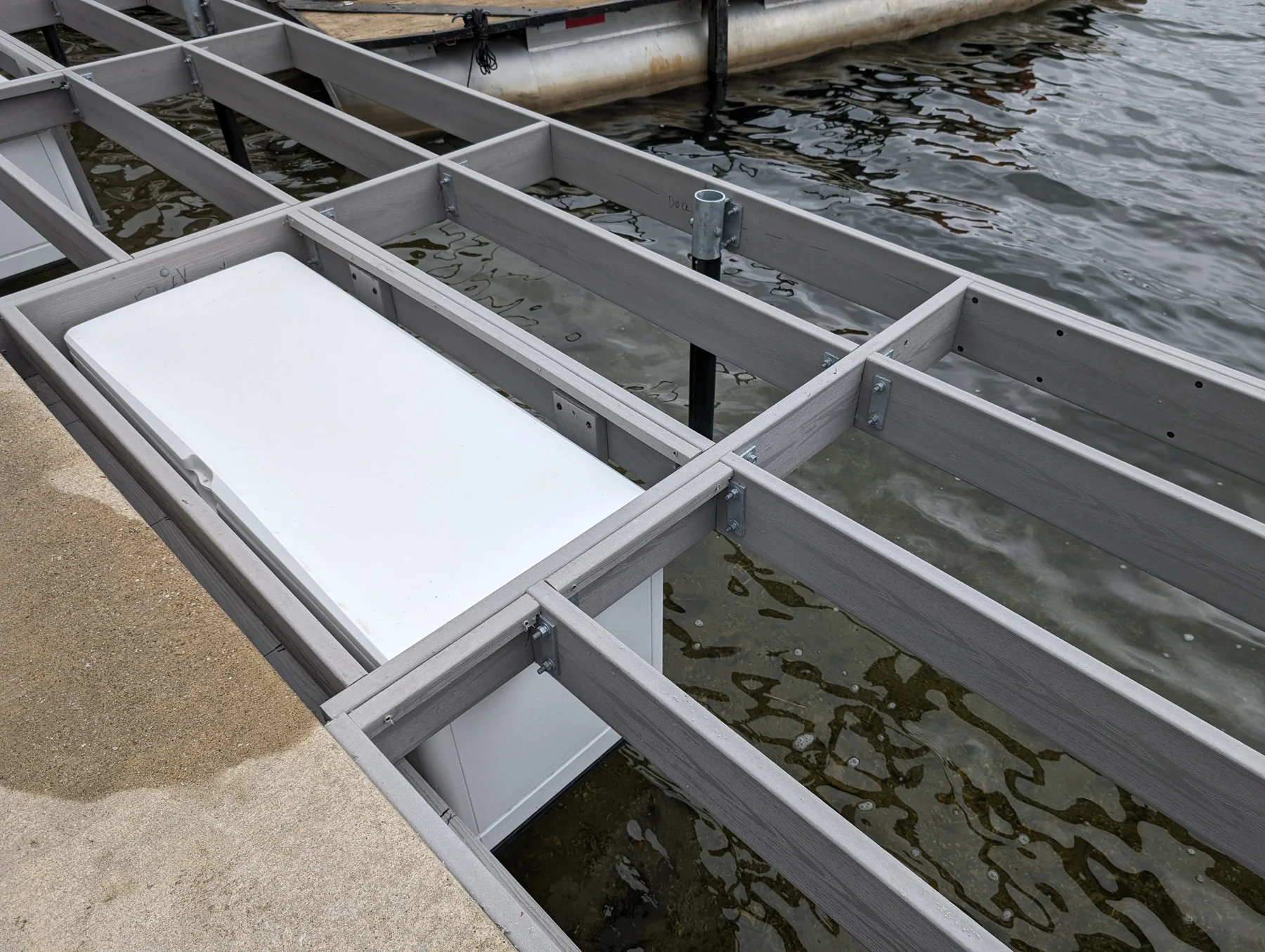
A dock is an assembly of parts working together. The decking is what you see and walk on, but its performance depends on supports, framing, fasteners and connections. Choose those together before deciding on the finish.
Separate the surface from the structure
When reviewing an existing dock, start beneath the boards. Replacing the surface will not correct failing supports or unsuitable connections. Ask which components can remain, what will be replaced and how the new materials will connect to the existing work.
Swipe the table to compare all columns.
| Component | What to compare |
|---|---|
| Decking | Texture, finish, cleaning, fastening and the span permitted for the exact product. |
| Framing and supports | Loads, exposure, foundations and compatibility with the deck above. |
| Connections | Approved hardware, movement, inspection access and replacement options. |
| Edges and accessories | Boarding, bumpers, storage, ladders and any added weight. |
Wood and composite products need specific details
Treated lumber and composite products vary by grade, profile and application. Compare the actual specification in the proposal rather than treating every product in a category as interchangeable. Ask what needs periodic finishing, which fasteners are required and how damaged pieces can be replaced.
WEARDECK is a wood-free composite material used in AquaLife projects. Its technical evaluation describes limits for specified applications. A decking span is not blanket approval to use the same board as a beam, post or other structural member. The chosen profile, loading and installation details must match its intended use.
What “no welds” does—and does not—tell you
A description of one connection method does not describe the strength or durability of the whole dock. Welded, bolted and molded connections each belong to a particular design. Ask how loads pass through the assembly, what movement is intended and what should be inspected over time.
The same principle applies to combining custom decking with a floating system. Added boards, benches or storage affect weight and may change the connection requirements. Have the complete arrangement reviewed before modifying factory components.
Choose useful details while the frame is still on paper
The Hidden Storage Dock project incorporates boxes within the framing. It is a useful example of why storage needs to be considered before decking is installed: the lid, supporting structure and walking route all need to work together.
Make a list of where you will store lines, board the boat and sit by the water. Review edges, access to hardware and future repairs along with the appearance. A detail is successful when it stays useful after the photograph is taken.
Handle samples and ask about care
Compare colors and textures in outdoor light where possible. Discuss sun exposure, cleaning and how the surface will be used. Texture does not remove the need to clear algae, dirt or ice, and surface temperature varies with conditions.
Request the current product warranty and care instructions for the intended residential or commercial use. Then compare those with the construction agreement. Materials, workmanship and seasonal service may have different terms.
Questions to bring to a material review
- Which parts of the dock use each specified material?
- What supports and fasteners does that exact product require?
- How will connections and concealed storage be accessed for inspection?
- What maintenance and seasonal handling should I plan for?
- Can I see a completed project with similar details?