
Dock planning · 3 MIN READ
Fixed or Floating Dock: Which Fits Your Waterfront?
By AquaLife Construction · Updated
Start with the shoreline, the water and the people using the dock. A fixed dock holds its walking surface at a set elevation. A floating dock rises and falls with the water within the limits of its anchoring and shore connection. Either can work well when the complete layout suits the property.
Compare the decisions that affect daily use
Swipe the table to compare all columns.
| Planning question | Fixed dock | Floating dock |
|---|---|---|
| What happens as water levels change? | Deck elevation stays fixed; the step to the boat changes. | Deck follows the water; shore transitions and anchoring must allow travel. |
| How does it feel underfoot? | Supported by foundations rather than flotation. | Movement depends on layout, flotation, loading and exposure. |
| What supports it? | Foundations and framing matched to the site. | Flotation plus an anchoring and connection system. |
| Can it change later? | Alterations require review of the existing structure. | Modular options may allow expansion, subject to loads and connections. |
| What happens in winter? | Needs a site-specific seasonal plan. | Needs a seasonal plan for the exact system and ice exposure. |
Look at the water through the seasons
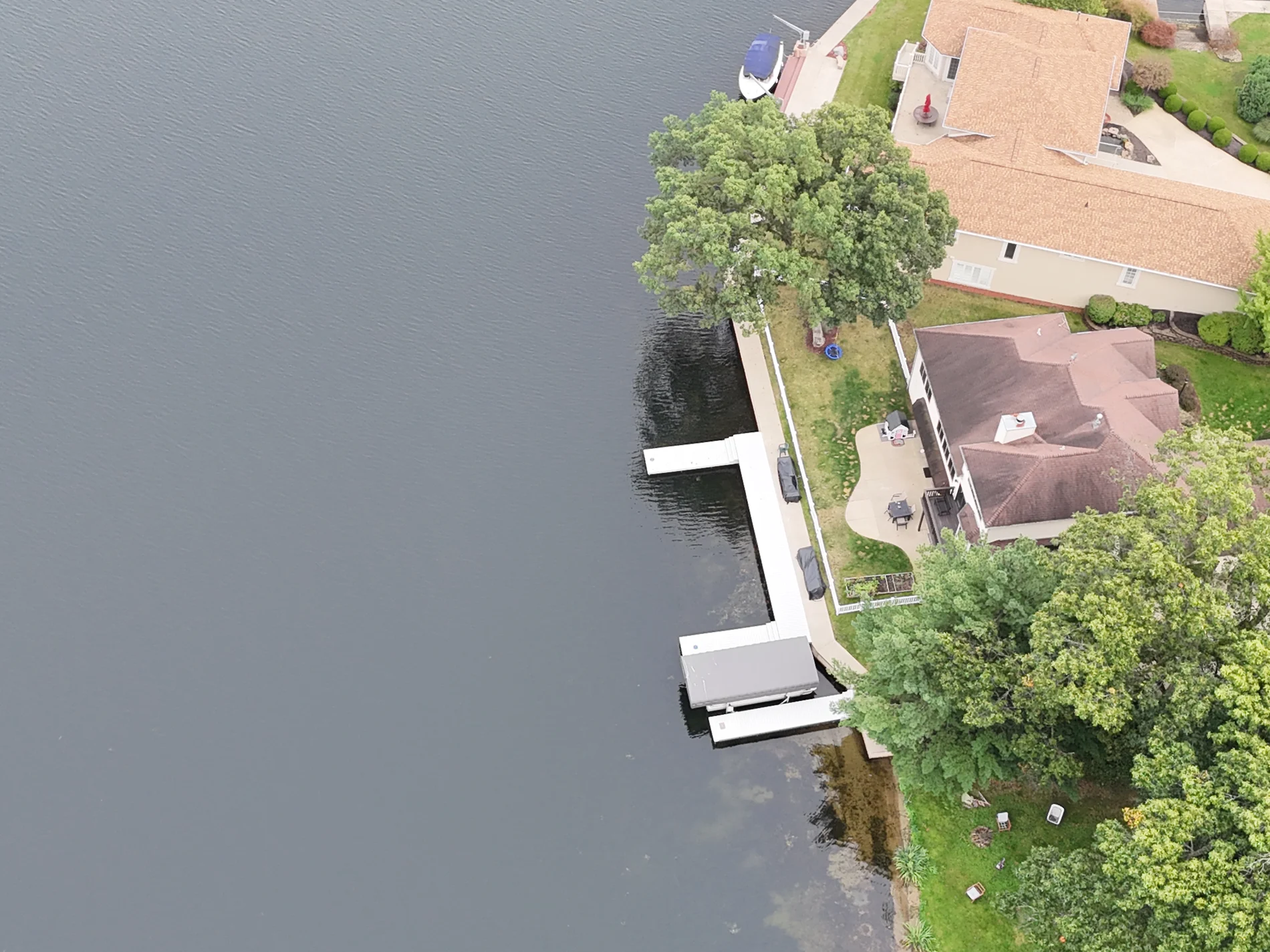
A photo taken on a calm summer day cannot show the whole operating range. Record the usual low and high water, shallow areas, nearby boat traffic and the direction of exposed water. On a fixed dock, those changes affect boarding height. On a floating dock, they affect the ramp angle, ground clearance and available movement at the guides.
Tell the installer about past ice movement and storm damage. Those observations help define the problem; they do not establish a safe design on their own. Material choice alone cannot make either dock type suitable for every shoreline.
Draw the route from the yard to the boat
Trace an ordinary trip with a cooler, fishing gear or a passenger who needs assistance. Include steps, turns, the shore connection and the boarding point. A large platform can still be awkward if the route onto it is narrow or the boat blocks the walking space.
Plan seating, storage, ladders and kayak access before settling on the footprint. This gives each activity room and helps avoid adding equipment that interferes with boarding later.
Dock post height is different from deck height
The visible top of a post does not set the walking height of a floating dock. Its freeboard depends on flotation and loading. Guide posts must remain engaged through the water-level range required by the design, even when a shorter post would look tidier.
Total post length includes the portion above the dock, the distance to the bottom and the embedment required by the site. Diameter, material and connections also matter. Have the setup assessed before cutting down or extending posts. Decorative rope and lighting are separate from any required guardrail design.
Include winter work in the choice
Compare seasonal removal, access for handling sections and storage space before purchasing. Wave Armor recommends taking docks and ports out of the water where winter ice is present. A fixed dock also needs its own ice assessment; choosing fixed construction is not, by itself, an ice-protection strategy.
Bring these details to the first conversation
- Wide photos from the yard and shoreline, plus close views of existing supports or connections.
- Typical water-level changes and any known shallow spots or difficult bottom conditions.
- Boat dimensions and the activities the dock needs to accommodate.
- The route for construction access and the space available for seasonal storage.