
Seasonal care · 3 MIN READ
Ohio Dock Winter Preparation Checklist
By AquaLife Construction · Updated
Make the winter plan while the waterfront is still accessible. The right approach depends on the specific dock, its attachments and local ice conditions. Use this checklist to organize the work, then follow the instructions for your equipment.
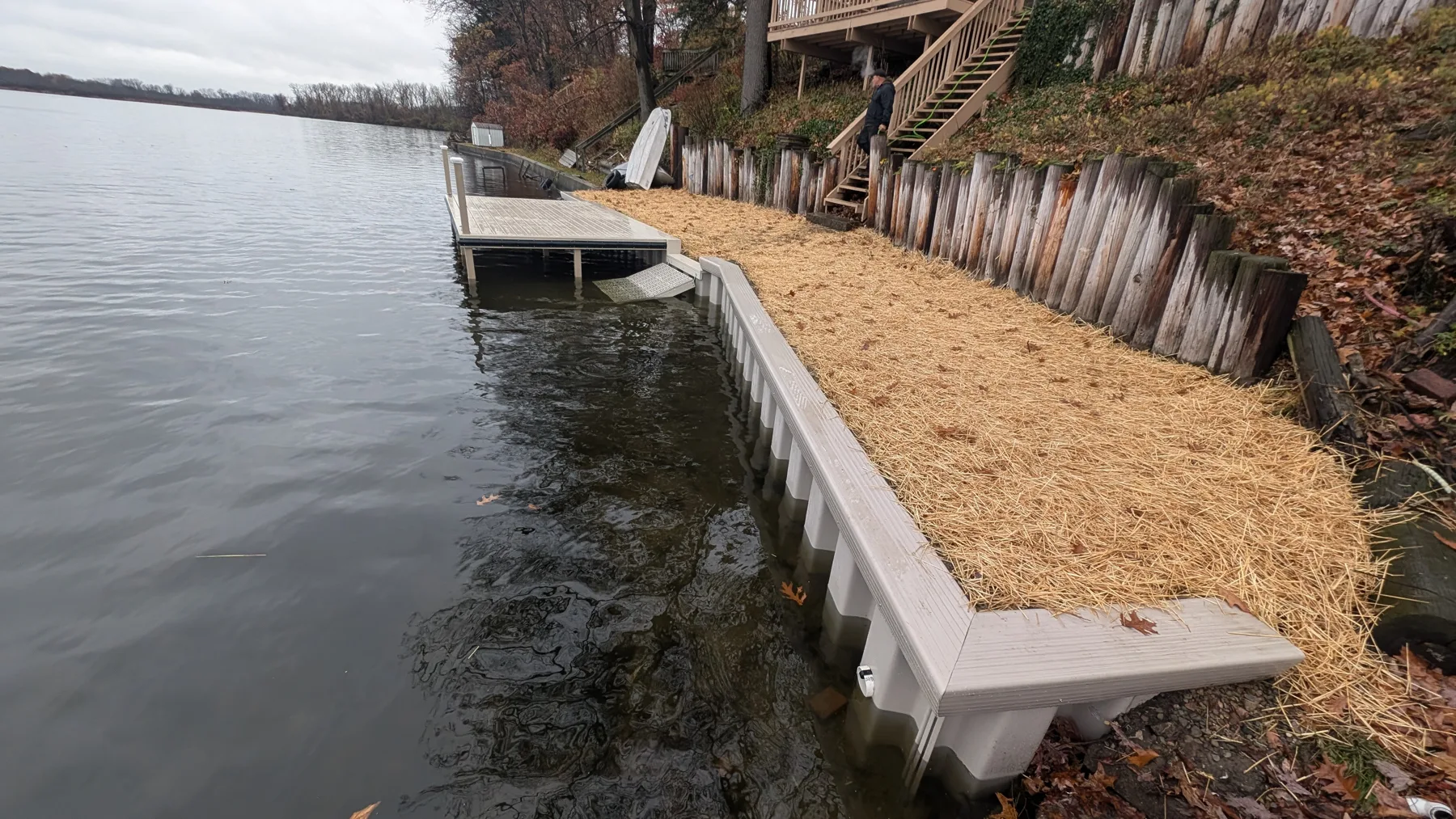
1. Establish the removal and storage plan
Identify the dock, port, canopy and accessory models. Keep their instructions together and establish who will handle removal, where components will be stored and how equipment can reach the shoreline.
Wave Armor recommends removing docks and ports during winter where ice is present; its care guidance excludes ice damage from warranty coverage. Do not treat a sheltered cove, flexible joint or choice of material as proof that a system can remain in moving ice.
- Confirm handling arrangements before freezing conditions arrive.
- Include removable accessories and the equipment needed to move heavy sections.
- Follow the storage orientation and support instructions for each product.
2. Record the condition before taking things apart
From a stable position, photograph the overall layout and visible connections. Note new movement, damaged surfaces or changes in boarding height. Have loose or damaged structural components assessed rather than continuing to use the dock until winter.
- Photograph connections and label parts as they are removed.
- Record missing or damaged hardware for correct replacement.
- Check accessible walking surfaces, ladders, bumpers and shore transitions.
- Keep the observations with the seasonal service record.
3. Clean and inspect the ports
Use the product’s cleaning instructions and inspect rollers, attachment points and accessible hardware. Wave Armor’s care sheet calls for periodic fastener checks and clearing debris from wheel pockets. Winter is a useful time to identify service needs, rather than discovering a loading problem on the first warm weekend.
Do not improvise roller positions or replacement hardware. Save the model information and consult the applicable setup instructions before making adjustments.
4. Check what happens on land
Look for soil loss, settlement or a changed drainage path beside the dock. Photograph new gaps at wall ends or shore connections. A problem at the bank can affect access even when the floating sections are in good condition.
Keep clear of suspected voids or unstable edges. Share observations with the installer so any necessary shoreline work can be planned independently of routine seasonal handling.
5. Have a weather plan beyond winter
High water, wind and waves are separate from ice. Review the operating and storm instructions for the dock, watercraft and canopy. Moving with the water does not mean a floating system can accommodate unlimited rise or exposure.
Do not release a dock to drift or rely on an example from another waterfront as a guarantee. A coastal storm case study does not establish the requirements for an Ohio lake. Plan the actual anchoring, access and seasonal arrangements for your site.
6. Leave a clear spring checklist
- Inspect stored components and replace damaged parts with the correct specified items.
- Review water levels and the shoreline before reinstalling.
- Check anchoring, connections and walking transitions before normal use.
- Reconfirm fit if the boat, PWC, accessories or layout have changed.
What to send when arranging seasonal work
Send the location, equipment models, photos, access limitations and the work you want included. Be clear whether you need removal only, transport and storage, or spring reinstallation as well. Those are different scopes and should be agreed before scheduling.