
Shoreline care · 3 MIN READ
Shoreline Erosion: What to Check Before Choosing a Seawall
By AquaLife Construction · Updated
Start with the cause of the changing shoreline. Water movement, runoff, deteriorated structures and animal burrows can create different problems—and more than one may be present. A wall material alone does not tell you which solution fits.
Document what is changing
Take wide photos from stable ground and record where soil is disappearing, the bank is settling or an existing wall is moving. Note whether changes follow heavy rain, high water or regular wake exposure. Older photos can help show how the edge has changed.
Stay away from undermined edges and suspected voids. The goal is to collect observations for an assessment, not to probe a failing bank yourself.
Swipe the table to compare all columns.
| Observation | Question for the assessment |
|---|---|
| Soil washing down from above | Where is runoff entering, and how should drainage be addressed? |
| Gaps near a wall end | How does the structure transition into the adjoining bank? |
| Settling behind the edge | Is there soil loss, drainage trouble or another concealed cause? |
| Holes or burrows | Is wildlife involved, and is specialist assessment needed? |
| Awkward dock connection | Can the shoreline and boarding arrangement be planned together? |
Compare a complete shoreline solution
A suitable solution may involve a wall, stone protection, bank work or a combination appropriate to the waterbody. The choice should account for soil, drainage, exposure, available space and any required approvals.
For a wall, ask how the ends, support, anchoring and drainage will be addressed. For other approaches, ask how the bank will be protected and how the dock or access route connects. Comparing surface appearance alone leaves out much of the work.
Where muskrat damage fits
Burrowing can contribute to shoreline damage, but it should not be assumed to explain every hole or settlement. Construction assessment and wildlife management serve different purposes. A new wall is not a substitute for identifying and addressing active animal activity.
Vinyl panels alone do not guarantee that animals cannot move around or beneath a structure. Discuss the whole installation and consult the relevant wildlife authority or a qualified specialist before disturbing animals or burrows.
Include the dock and the route to the water
If the shoreline is being rebuilt, review the step from shore to dock, the boarding location and any access to the water. Coordinating those details can avoid finishing the bank and then reopening it for a connection that was overlooked.
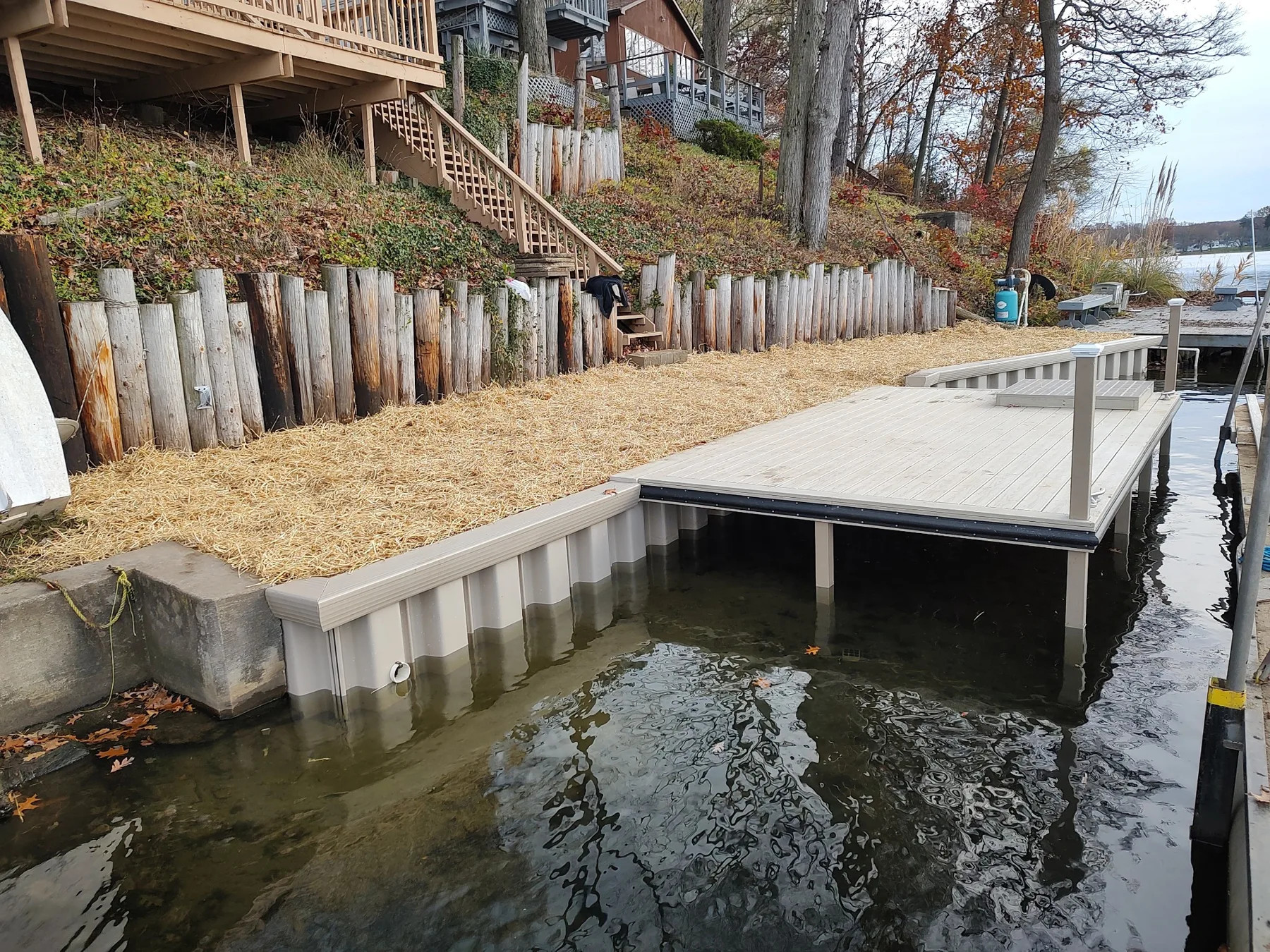
The Long Lake Shoreline project shows a capped wall alongside a dock and restored bank. Its close-up photos show transitions and outlets as well as the overall appearance. Those details make it a useful conversation starter for a site assessment.
What a proposal should make clear
- The problem being addressed and the proposed extent of work.
- Access, material handling and protection of adjoining areas.
- Drainage, ends and connections to existing structures.
- Responsibilities for approvals and changes to the agreed scope.
- Cleanup, bank restoration and any follow-up inspection.
Keep a record after the work
Save completion photos and the care instructions. Compare the shoreline after major weather or noticeable water changes, using safe viewpoints. Report new settlement, soil loss or movement rather than assuming it is routine.