
Boats & PWC · 3 MIN READ
Boat Port or Boat Lift: Choosing the Right Setup
By AquaLife Construction · Updated
A drive-on port and a boat lift can both support a boat out of the water between outings, but they do it differently. The useful choice starts with your actual boat and shoreline, then considers how you will board, launch and maintain the setup.
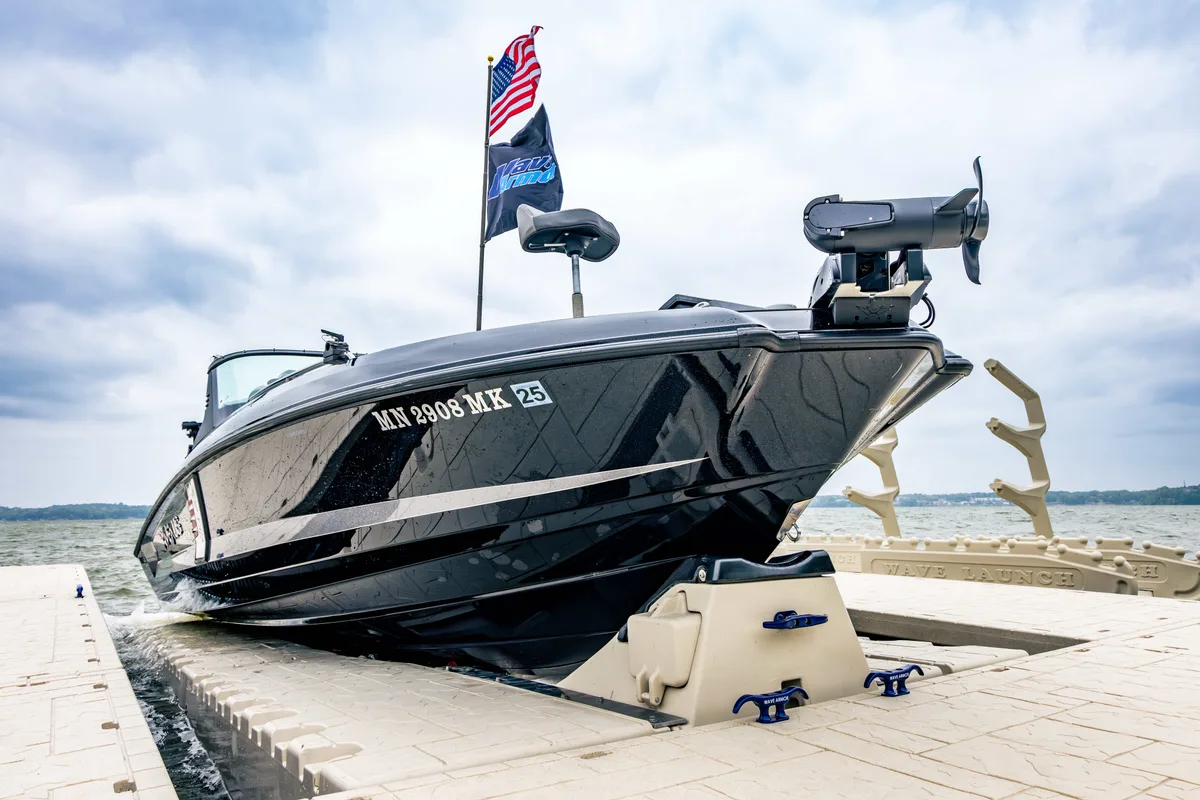
Compare the whole installation
Swipe the table to compare all columns.
| Consideration | Drive-on port | Boat lift |
|---|---|---|
| Support | Boat rests on a compatible port and hull-support arrangement. | Boat rests on supports raised by the selected lift mechanism. |
| Site fit | Needs suitable entry depth, approach and attachment geometry. | Needs suitable depth, foundations or flotation, and operating clearance. |
| Daily use | Review drive-on and launch procedures for the craft. | Review controls, lifting procedure and access for boarding. |
| Upkeep | Inspect rollers, connections, anchoring and any powered accessories. | Follow the maintenance schedule for the exact lifting system. |
| Future boat | Check the new hull and loaded weight before reuse. | Recheck capacity, support arrangement and dimensions before reuse. |
Bring the actual boat information
Record the model and year, hull configuration, beam, engine and loaded weight. Include fuel, batteries, equipment and the loads specified by the equipment manufacturer. A capacity number does not establish hull compatibility or adequate drive clearance.
A conventional V-hull port should not be assumed to fit a pontoon or a different hull style. Likewise, extra flotation or a wider platform is not automatic approval for a heavier boat. Ask for the exact proposed configuration to be checked.
Walk through an ordinary outing
Consider where passengers wait, where the operator steps off and how lines are reached. Can you approach in the available space? Does a canopy or nearby boat interfere with boarding? Review the normal operating limits as well as what to do when conditions are unsuitable.
Ask to see the operating instructions before purchasing. Powered launch assistance may be available for a compatible port, but it cannot correct an unsuitable hull or poor installation.
Where bottom paint fits
Bottom paint is a separate hull-maintenance decision. Antifouling coatings address growth on immersed surfaces; a port or lift changes how the boat is stored. Neither choice automatically resolves the requirements of an existing coating or hull finish.
Discuss the finish and expected time in the water with the boat manufacturer or a marine coating professional. Keep cleaning and inspection in the ownership plan even when the boat is usually stored out of the water.
Choosing a model without guessing at capacity
For a system such as the Wave Armor Pro 8, request confirmation of the current capacity and hull fit for the supplied version. If a catalog and product page give different figures, resolve the discrepancy with the supplier before ordering. Do not choose the more favorable number.
The proposal should identify the port or lift, attachment components, any approved assistance system and the seasonal requirements. That makes the comparison more useful than a model name and starting price.
Include upkeep and winter handling
Ask which parts need routine inspection, how service is performed and what seasonal handling costs are separate. The winter plan should suit the exact equipment and local conditions. For Wave Armor docks and ports, review the manufacturer’s recommendation to remove them where ice is present.
Prepare for a fit review
- Boat model, year, dimensions and loaded weight information.
- Photos of the slip, shore connection and approach from the water.
- Known low-water depth and seasonal level changes.
- Boarding needs, canopy plans and any likely change of boat.